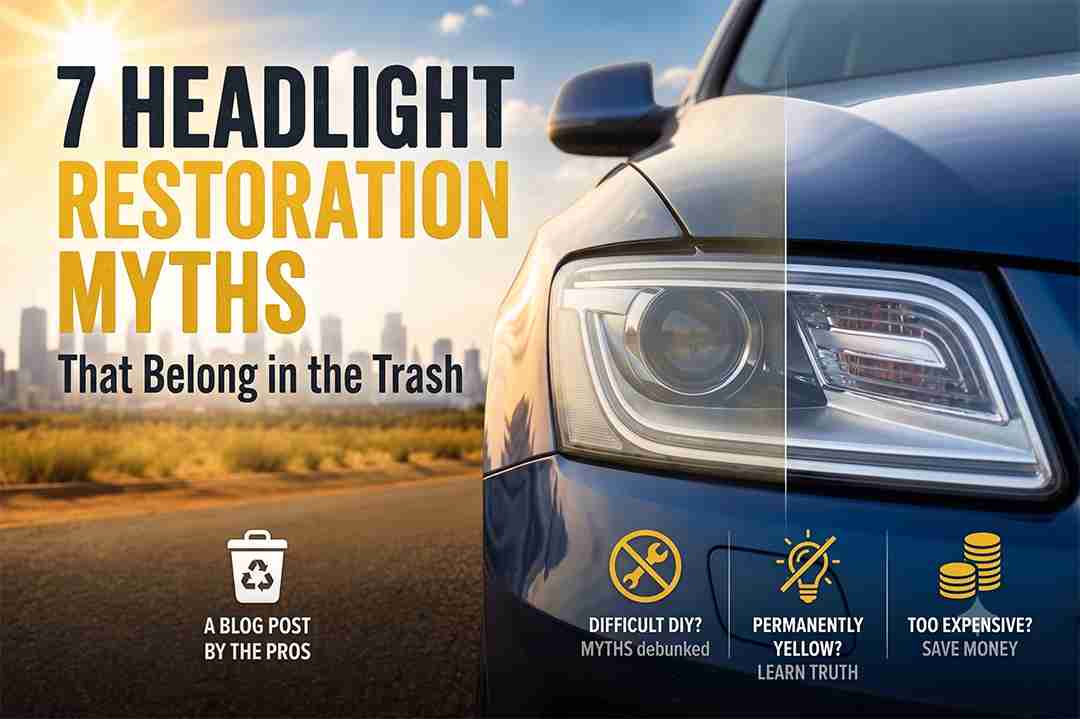
Somewhere out there, a well-meaning YouTuber convinced half of North Texas that toothpaste can fix oxidized headlights. We need to talk about that.
Look, we get it. When your headlights turn that sad shade of banana yellow, the internet is full of “hacks” promising a fix for $0 and five minutes of elbow grease. Most of these headlight restoration myths do nothing. Some of them actually make things worse. And a couple of them are just… baffling that they caught on in the first place.
So let’s clear the air (and your lenses) by busting the most common headlight restoration myths, one by one.
Myth #1: Toothpaste Will Buff Out the Cloudiness
Toothpaste is a mild abrasive, so yes, it can remove a very thin layer of oxidation. But it’s designed for tooth enamel, not automotive-grade polycarbonate. Most drivers see a slight, temporary improvement that fades within a few weeks because the abrasive isn’t strong enough or consistent enough to actually correct the surface. You end up back where you started, with foggy headlights, except now your teeth are suffering.
Why it doesn’t work long-term: Real restoration requires progressive sanding at specific grits to remove the damaged outer layer evenly, followed by a UV protective coating.
Myth #2: Bug and Tar Remover is a Restoration Method
Bug spray is great at what it’s built for: dissolving bug guts and road tar off the surface of your headlights. What it is not built for is correcting UV oxidation baked into the plastic itself. Spraying it on a cloudy headlight is like using window cleaner on a scratched windshield. It’ll look shinier for a minute, but the actual damage is still sitting right there underneath.
Myth #3: WD-40 Gives You a "Permanent Shine"
WD-40 is a personal favorite myth of mine because it works almost too well for about 48 hours. It temporarily fills in micro-scratches and adds a glossy look, which tricks many people into thinking the job is done. Then the product evaporates, the haze creeps back, and you’re left more disappointed than before, because now you know it’s not actually fixed.
Myth #4: Sandpaper Alone Is All You Need
Here’s where it gets a little more dangerous. Sanding is a real and necessary part of professional headlight restoration, but it has to be done correctly, with the right progression of grits, even pressure, and consistent water lubrication. DIYers who go in with a single grit of sandpaper (or worse, a power tool with zero technique) often leave behind uneven scratch patterns that trap light and make headlights look hazy even after “restoration.” Some go so aggressive they thin the lens or damage it beyond a safe fix, causing more harm than good.
I won’t bore you with grit numbers and chemical names here (that’s a conversation for your driveway, not a blog post), but the short version is sanding without the full process is only half a job.
Myth #5: Clear Coat Spray Paint Fixes It for Good
A can of clear coat from the auto parts store might look like a headlight-specific fix, but most of these products aren’t formulated for the flex, heat, and UV exposure headlights deal with every day. They tend to peel, bubble, or yellow again within months, sometimes leaving a worse mess than the original oxidation. If you’ve ever seen a headlight with weird cracking or a cloudy film peeling from the inside out, there’s a good chance a spray can was involved.
Myth #6: Baking Soda is a DIY Headlight Restoration Tool
Baking soda paste shows up in a lot of “eco-friendly hack” lists but is a mild, inconsistent abrasion that barely scratches the surface (sometimes literally). It’s not strong enough to restore car headlights, and it’s not going to hold up to a North Texas summer, even if you do it as part of your regular maintenance.
Myth #7: Once It's Clear, It's Clear Forever
This one isn’t really about a DIY hack; it’s about expectations. Any headlight restoration, even a professional one, needs a quality UV-protectant sealant to stay clear long-term. Skip that step (which many quick fixes do) and the sun will start the oxidation process all over again within a matter of months. That’s the whole reason a proper multi-step process matters: it’s not just about getting the oxidation off; it’s about keeping it off. Ignore the claims from some headlight restoration kits that say “forever” protection. The Texas sun just entered the chat.
So What Actually Works?
A professional restoration process removes the damaged, foggy, oxidized layer of plastic through careful, progressive sanding; then polishes the surface to restore clarity; then seals it with a UV protection designed to hold up outdoors. Done right, it restores factory-level clarity and protects that clarity for years, not weeks.
That’s the process I bring to your driveway across North Texas. No hacks, no crossed fingers, just a straightforward mobile service that gets your headlights (and your nighttime visibility) back to where they should be for a fraction of the cost of new headlight assemblies.
Not Every Headlight Can Be Saved (And I'll Tell You That)
I’ll always give it to you straight. Some headlights, especially those with moisture trapped inside the headlight lens, deep cracking, or internal yellowing from UV rays, are beyond what restoration can fix. If that’s the case with your vehicle, I’ll let you know upfront instead of taking your money for expected restored headlights.
Ready for Real Headlight Restoration in North Texas?
If you’re tired of yellowed headlights, hazy headlights (and tired of myths about headlight restoration), it’s time for restoring your headlights with my professional services. I will come to you anywhere in North Texas with professional-grade restoration that actually lasts, backed by before-and-after results you can see for yourself.
Book your mobile headlight restoration today and leave the toothpaste in the bathroom, where it belongs.